From ideas to roadmap.
Context
When I arrived, the company had no formal method to capture, assess, or prioritize features across hardware, software, and ML; decisions were ad-hoc and engineering-constrained. We were building a new category with limited data and many plausible “first customers,” which raised uncertainty. Glasshouse operations behave like complex systems with lagging indicators, so time-to-learning was slow. Stakeholders had competing goals—yield, quality, energy, and contracts—creating natural trade-offs. We needed an operating model that connected discovery, planning, build, and iteration within a lifecycle PMs could own end-to-end.
Actions
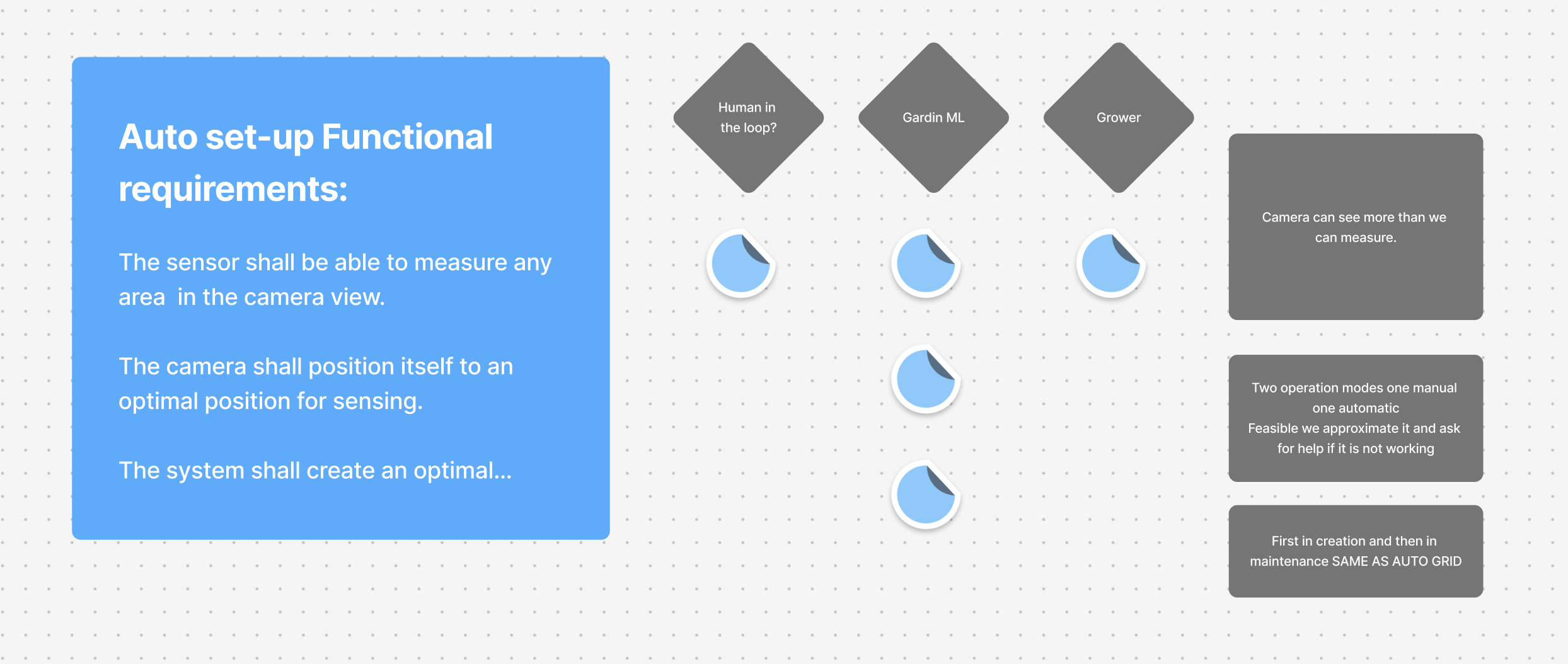
I installed a Stanford-inspired lifecycle backbone (Ideation → Validation → Planning → Build → Launch/Growth) and made it the default way we worked. I created a standardized intake (problem brief + evidence checklist) and a lean PRD template with outcomes and acceptance criteria. I stood up dual-track discovery/delivery, implemented a scoring rubric (impact, confidence, effort, risk) with quick Fermi estimates, and instituted weekly triage. I mapped the customer journey with stage metrics and tied experiments and success criteria to journey drop-offs and value themes. I then organized the roadmap by the four value themes to keep prioritization outcome-driven.
Results
We replaced ad-hoc picks with a transparent, evidence-based prioritization system that held up in executive and field reviews. Time-to-learning improved via earlier stress detection loops, which accelerated decisions on climate adjustments. Go/No-Go calls became crisper by linking customer pain, willingness to pay, and market size before building. Cross-functional alignment improved as Design, Eng, Data, and Ops planned in themes, shipped in increments, and reviewed against defined KPIs. The result is a repeatable lifecycle that scales—PMs own the journey from ideation through post-launch iteration.
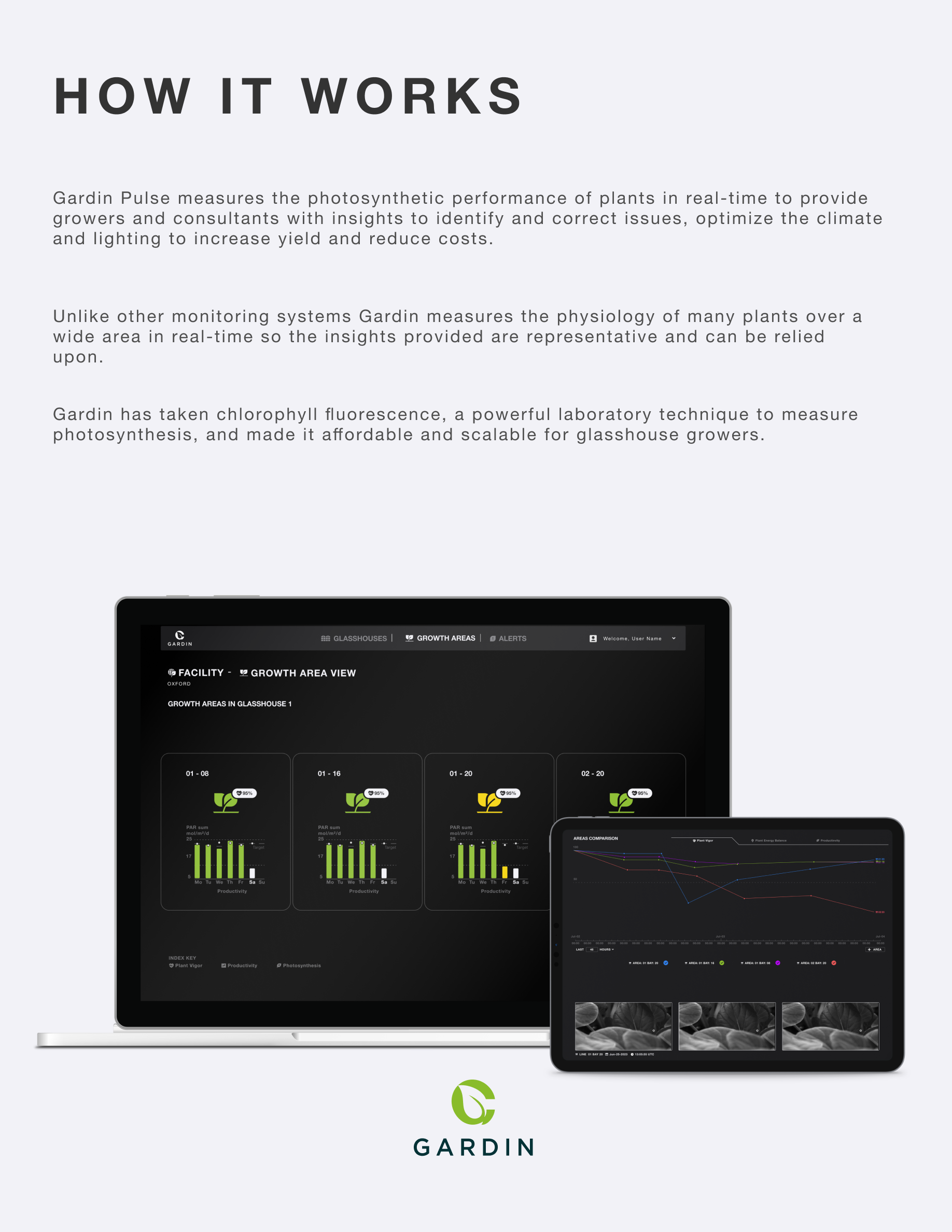
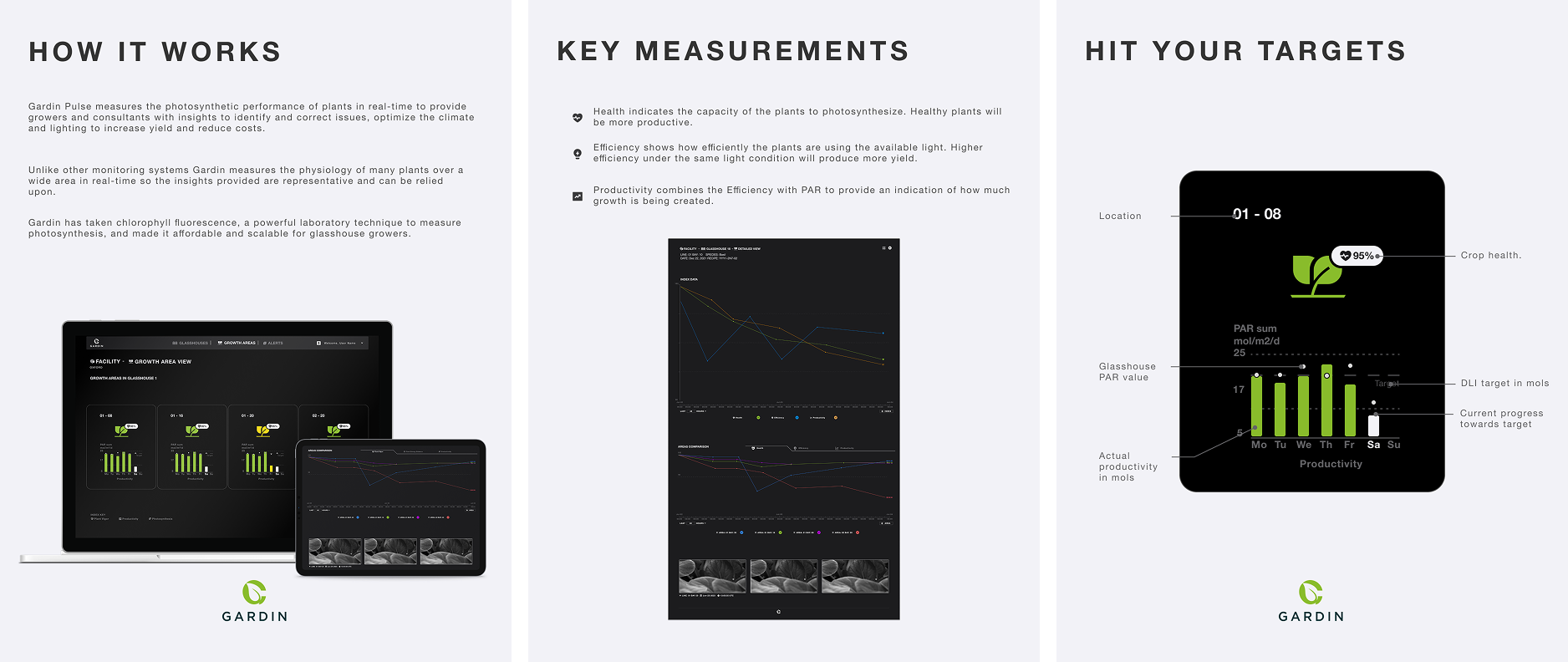
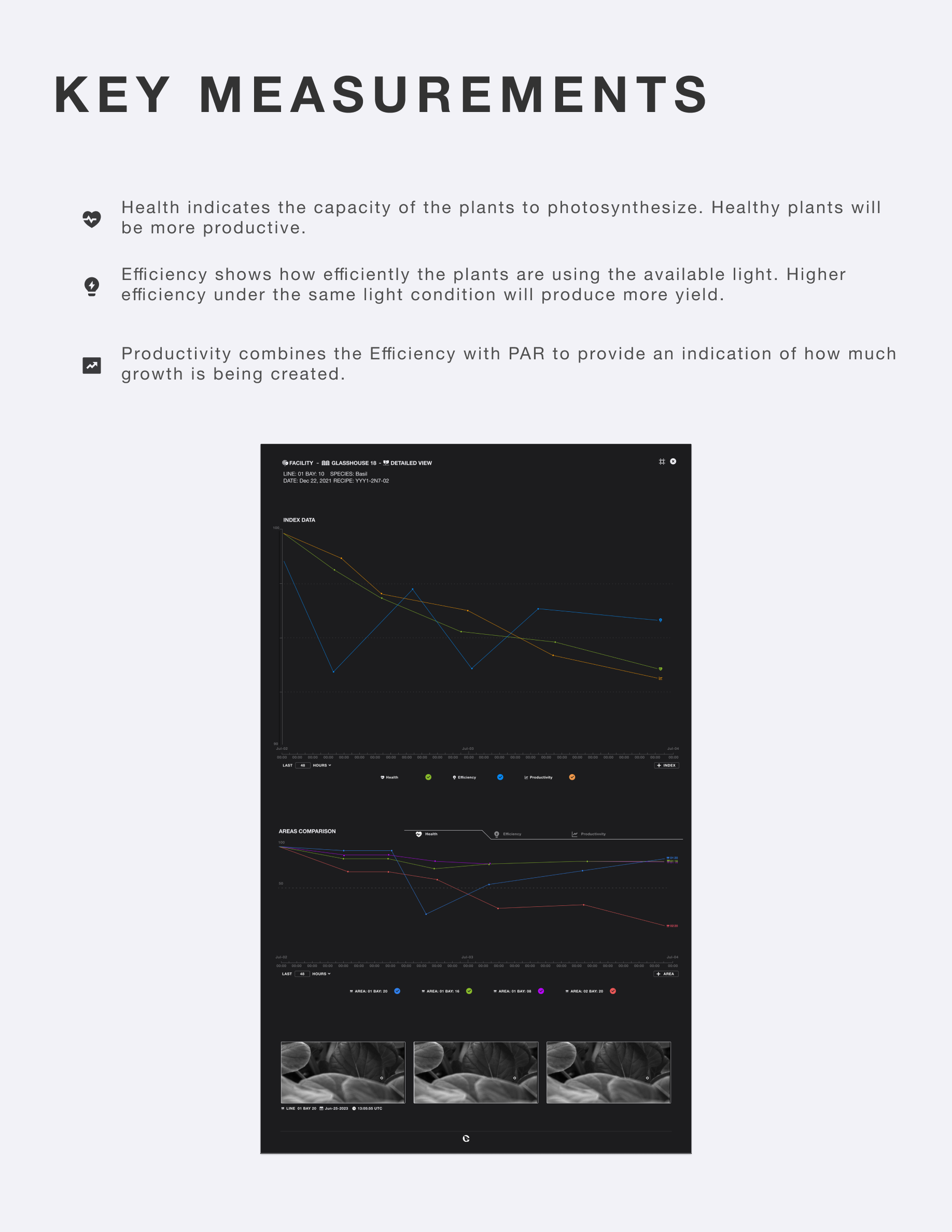
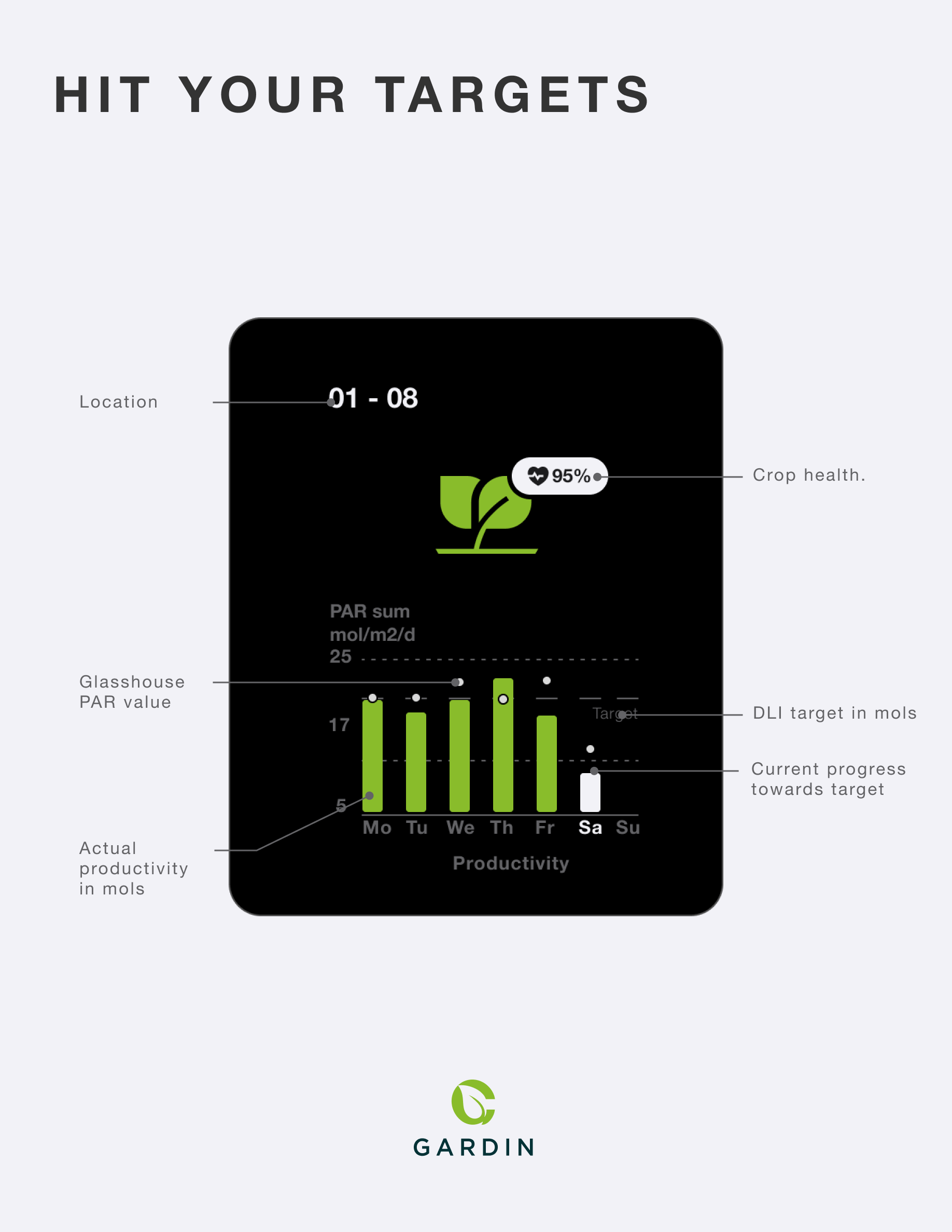
As an experienced product designer newly certified in Stanford’s Product Management program, Gardin was the first product I formally managed end-to-end. I positioned it as an farmer co-pilot for glasshouse teams facing talent shortages and complex crop decisions. We instrumented the farm with ML-ready sensors and built a decision-support layer so growers could spot stress signals early and adjust climate levers (temperature, humidity, light, CO₂) with feedback loops measured in hours—not harvests.
To align work with the Stanford product lifecycle (Ideation → Validation → Planning → Build → Launch/Growth), I mapped every decision to its lifecycle stage and routed discovery learning directly into backlog priorities and lightweight PRDs.
“ Your product isn’t only your product. It’s the whole user experience, a chain that begins when someone learns about your brand for the first time and ends when your product disappears from their life … ”
— Tony Fadell
I led cross-functional sessions to visualize the end-to-end journey. For each stage, we defined the problem statement, success criteria, key evidence sources, and owner. That journey map became our single source of truth for prioritization, experiment design, and stage-specific metrics tied to adoption, retention, and ROI.

Gardin’s Customer Journey
Problem Space Definition Process

I established a structured problem-framing process before any solutioning. We captured opportunity statements, mapped causal chains from symptoms to root causes, and wrote explicit outcome metrics up front. The output was a standard intake (problem brief + evidence checklist) that we used to accept, defer, or reject requests and to shape lean tests prior to build.
Opportunities only advanced when they satisfied a simple triad: real grower pain, demonstrated willingness to pay, and a market large enough to justify focus. We paired qualitative discovery with top-down TAM and bottom-up unit economics to size the initial wedge and determine the smallest valuable experiment that could validate business viability.

The Opportunity
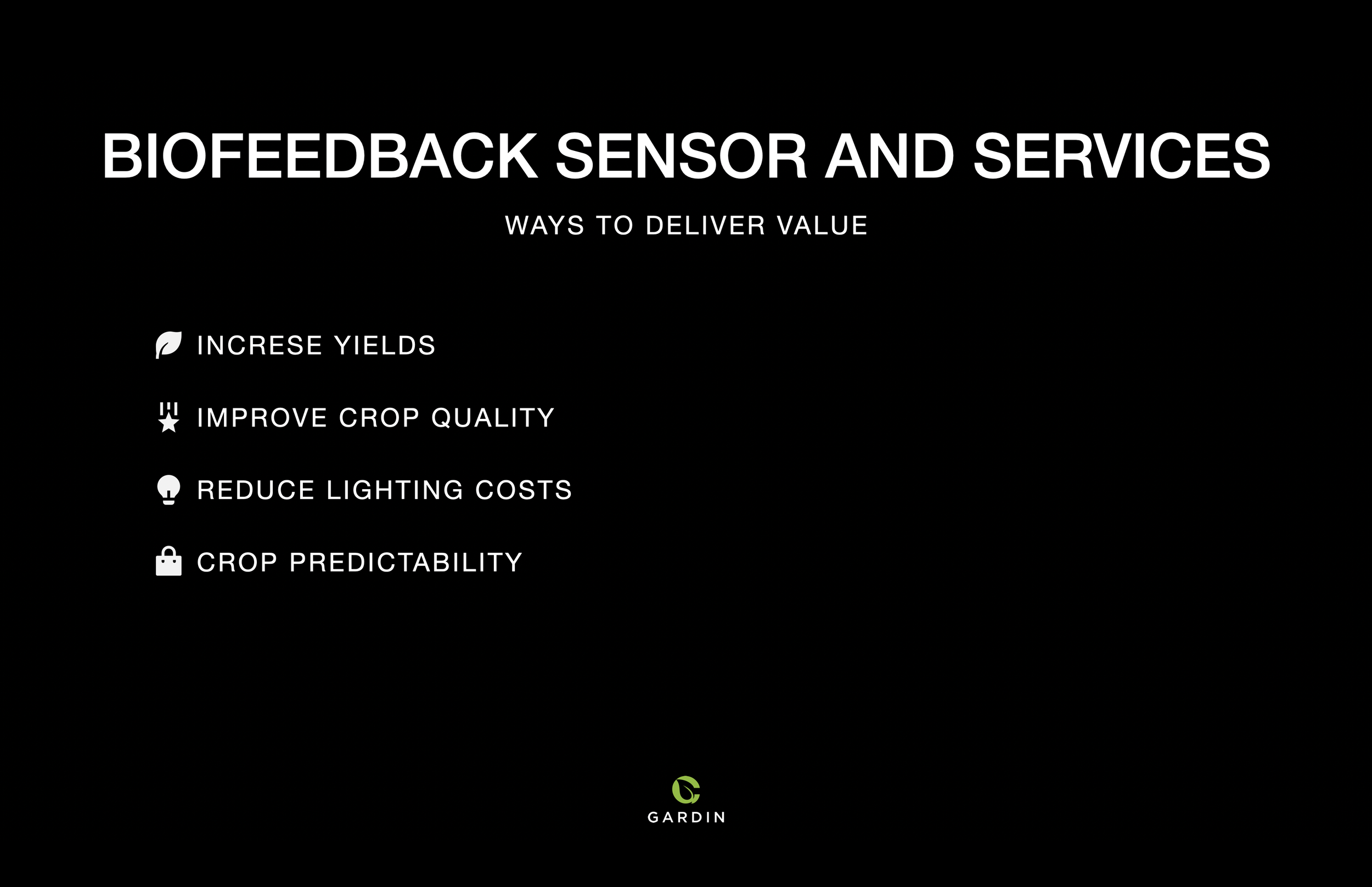
I organized the roadmap around four value themes growers would pay for: increase yield stability, maintain/premium-grade quality, reduce energy intensity, and meet/maintain contractual obligations. Each theme carried outcome KPIs, guardrails, and a living experiment backlog so teams delivered iteratively while staying tethered to measurable business results.
Value Delivery
Gardin’s product management.
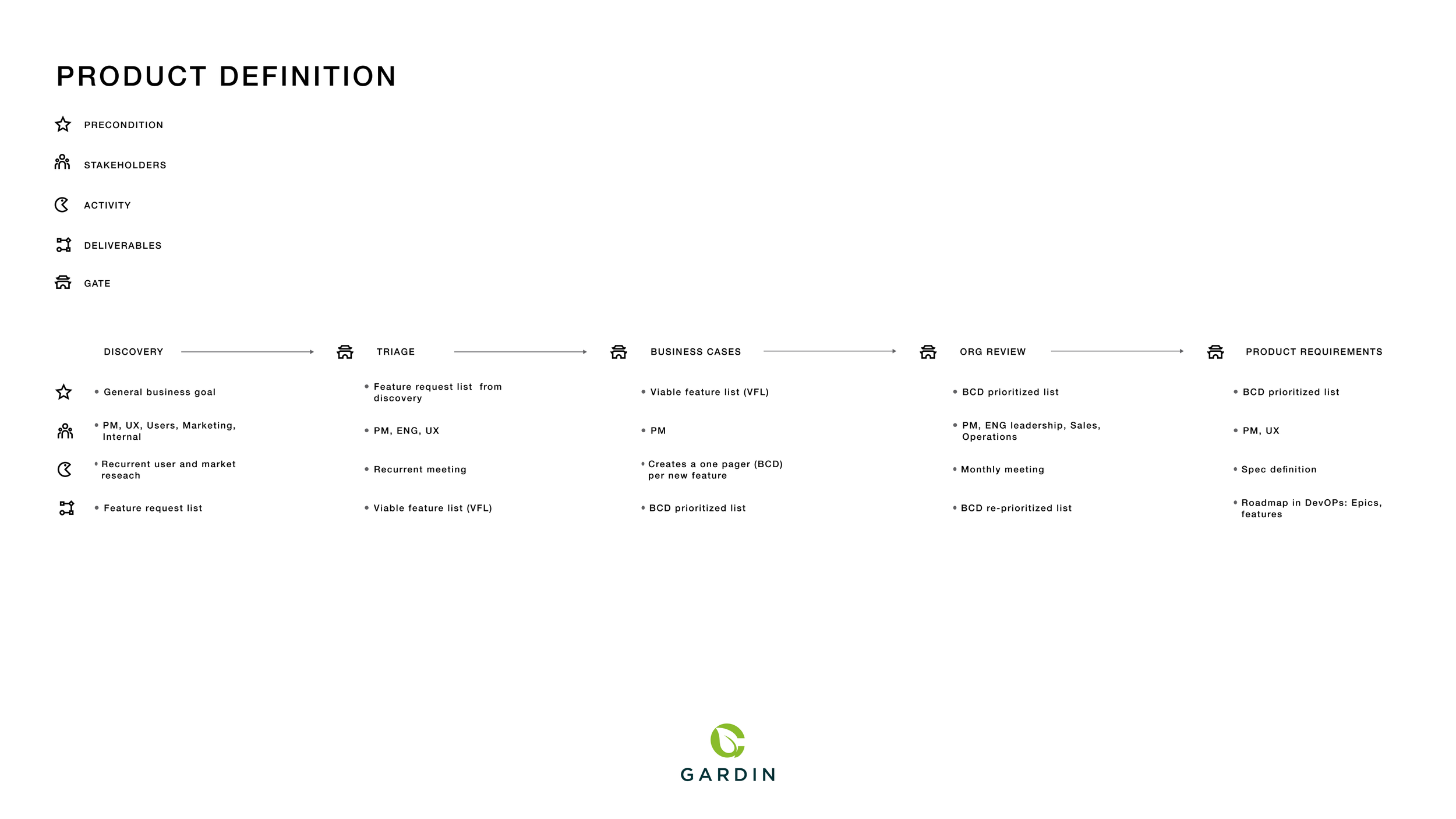
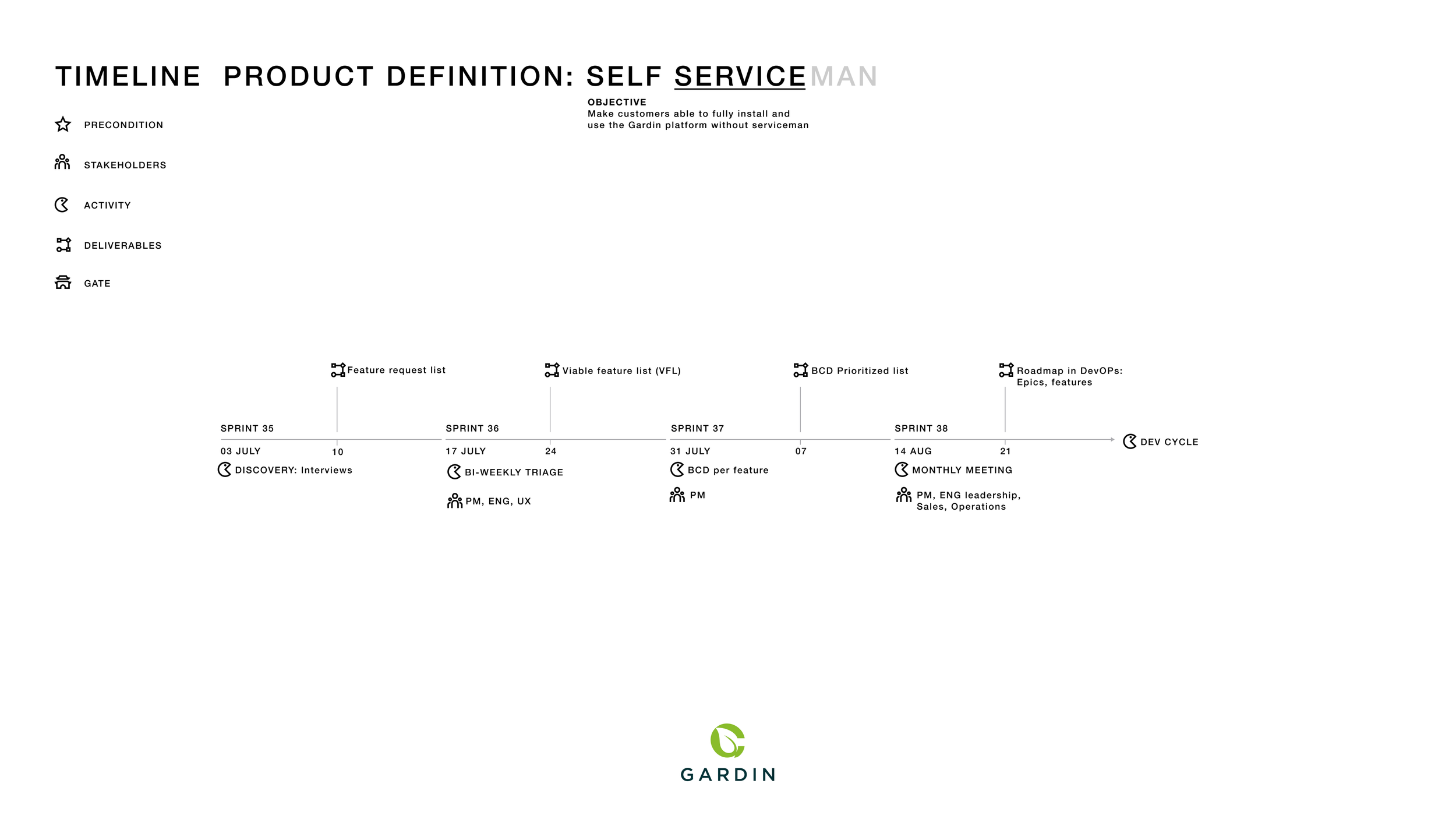
I implemented Gardin’s first formal PM system across the full lifecycle. Top-down, we benchmarked “best in class” outcomes; bottom-up, we used Fermi estimates to compare impact, effort, and risk. We adopted dual-track discovery/delivery, created lean PRDs with acceptance criteria, and ran a weekly triage across Design, Eng, Data, and Ops to re-prioritize using evidence, not opinion. This created a durable intake → scoring → sequencing loop from ideation to launch and iteration.